Miss Universe Canada apologizes for Indigenous-themed costumes
Two contestants faced backlash for wearing Indigenous regalia; pageant commits to new costume guidelines.
Conversation activity · last 4 days peak 4/hr
Summary, timeline and people extracted by Claude from 15 items across 4 sources · 5h ago. Quotes are verbatim.
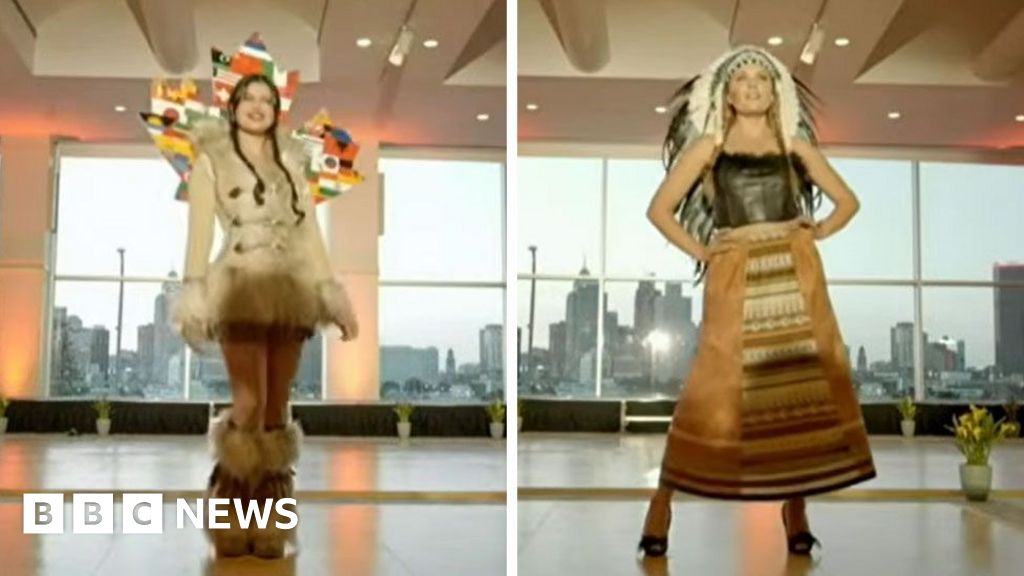
During Miss Universe Canada's national costume segment in Windsor, Ontario on August 10, two contestants wore Indigenous-themed outfits—one featuring a feathered headdress with a red handprint, the other fur mukluks and braids. Former Miss Universe Canada winner Ashley Callingbull, a Plains Cree woman, publicly criticized the choices as cultural appropriation. Both contestants and the pageant have since apologized and committed to creating comprehensive costume guidelines.
- Two contestants wore Indigenous-themed costumes—feathered headdress and fur mukluks—during the national costume segment, triggering accusations of cultural appropriation.
- Ashley Callingbull, the first Indigenous woman to win Miss Universe Canada, publicly criticized the choices and pressured the pageant for accountability.
- Both contestants apologized; the pageant acknowledged harm and committed to creating comprehensive costume guidelines with Callingbull as official liaison.
- The incident reflects ongoing tensions around representation and cultural respect in pageant competitions.
How it unfolded
-
Karisa Haverkamp and Jasleen Kaily each posted apologies on Instagram, with Haverkamp acknowledging that her outfit caused hurt and Kaily clarifying her intent was to celebrate Indigenous culture.
“I acknowledge and recognise that my outfit for the national costume caused hurt and offence to people in the indigenous community.”
Karisa Haverkamp · Google News ↗ -
Callingbull expressed gratitude for the pageant's receptiveness, noting that the new costume guidelines will help moving forward and that change requires speaking up.
“Change doesn't happen unless you speak up. Thank you MUC, for acknowledging this and doing what needed to be done.”
Ashley Callingbull · Google News ↗ -
Director Borrelli announced that Callingbull will serve as the official liaison for the national costume segment in future cycles, and stated the pageant takes full responsibility for the error.
“We will learn from it, we will make it better, we will make it right.”
Sonny Borrelli · Google News ↗ -
During the national costume segment in Windsor, Ontario, contestant Karisa Haverkamp wore a feathered headdress with a red handprint, and contestant Jasleen Kaily wore a fur dress with mukluks and braids.
-
During the Saturday final, Callingbull, co-presenting the event and the first Indigenous woman to win Miss Universe Canada, publicly called out the costumes, saying they represented cultural appropriation.
“It's 2026, we should know better.”
Ashley Callingbull · Google News ↗ -
The pageant issued a statement acknowledging that costumes may have caused offense and announced plans for a comprehensive costume guide.
“If any costume caused offence, hurt, or misunderstanding, please know that it was never our intention.”
Miss Universe Canada · Google News ↗
What people are saying verbatim
“It's 2026, we should know better.”
Ashley Callingbull, Former Miss Universe Canada (2024) · BBC News ↗ · Aug 9
“I felt like I was educating them and giving them hell at the same time, because I needed them to understand how bad this was and how much it affects other people.”
Ashley Callingbull, Former Miss Universe Canada (2024) · CP24 ↗ · Aug 9
“If any costume caused offence, hurt, or misunderstanding, please know that it was never our intention.”
Miss Universe Canada, Pageant organization · CP24 ↗ · Aug 9
“I acknowledge and recognise that my outfit for the national costume caused hurt and offence to people in the indigenous community.”
Karisa Haverkamp, Miss Universe Canada contestant · BBC News ↗ · Aug 10
“My intention was never to disrespect or misrepresent indigenous culture but rather to recognise and celebrate one of the First Peoples of Canada.”
Jasleen Kaily, Miss Universe Canada contestant · BBC News ↗ · Aug 10
“Change doesn't happen unless you speak up. Thank you MUC, for acknowledging this and doing what needed to be done.”
Ashley Callingbull, Former Miss Universe Canada (2024) · CP24 ↗ · Aug 9
“We will learn from it, we will make it better, we will make it right.”
Sonny Borrelli, Pageant director · BBC News ↗ · Aug 10
“A part of reconciliation is that we educate and learn and understand and move on from these things in a good way.”
Ashley Callingbull, Former Miss Universe Canada (2024) · BBC News ↗ · Aug 10
The conversation positions from the crowd, verbatim
Reddit commentary shows deep division: some argue that cultural appropriation claims go too far and that context matters, others defend the criticism entirely, and a few express frustration with all parties involved.
The dispute Whether the response represents genuine accountability or performative gesturing versus whether criticism of the costumes was justified or represents excessive cultural sensitivity enforcement.
Overcorrection and performative outrage; not all cultural celebration or inspiration constitutes harmful appropriation.
-
“I can assure you that Japan is also annoyed by inauthentic garb being associated broadly with their culture…That's one of the worst examples you could have used.”
Opposite_Bus1878 · reddit ↗
Everyone involved deserves blame—both the organizers and those making a fuss.
-
“Fuck everyone who okayed these costumes and fuck everyone overeacting to these costumes. In conclusion, fuck everyone involved and mentioned in the story.”
gabacus_39 · reddit ↗
Voices from the web unedited
-
I can assure you that Japan is also annoyed by inauthentic garb being associated broadly with their culture. In that case it's usually Americans assuming Japanese people are obsessed with anime and showing up dressed in weeaboo shit. That's one of the worst examples you could have used.
-
Fuck everyone who okayed these costumes and fuck everyone overeacting to these costumes. In conclusion, fuck everyone involved and mentioned in the story.
-
the difference is Helen wasn't a real person and film directors can make creative choices about how they portray a story that predates ancient Greece
-
This wouldn’t have happened if they’d just dressed up as a sexy Bonhomme de Neige like everyone wanted.