Paolo de Souza reveals hidden water evidence in 20-year-old Mars Spirit rover data
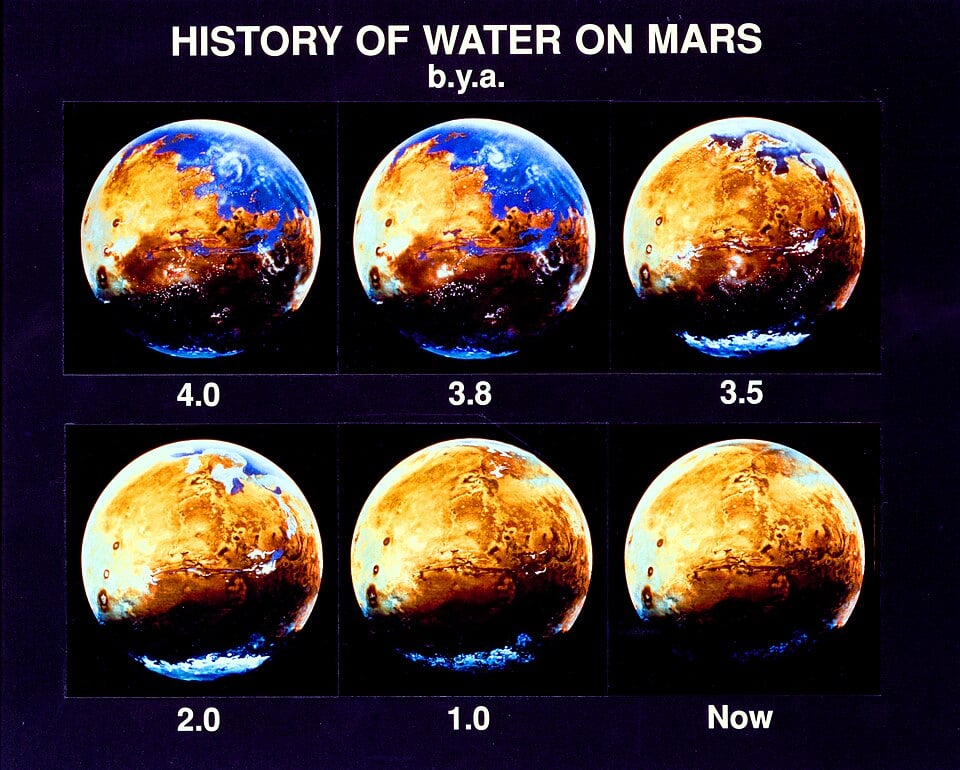
Australian scientist re-examines mineral patterns from NASA's Spirit rover to show ancient Mars was far wetter than previously understood.
Conversation activity · last 41 hours peak 1/hr
Summary, timeline and people extracted by Claude from 2 items across 2 sources · 1d ago. Quotes are verbatim.
Paolo de Souza of Edith Cowan University analyzed two decades of mineralogical measurements from NASA's Spirit rover at Gusev Crater and discovered a clear pattern of water-related minerals—hematite and altered magnetite—that were present in the data all along but too small to detect individually. His findings suggest significant areas of ancient Mars may have once been covered by water, making it the most detailed iron-mineral profile of Martian soil to date.
- de Souza identified a definitive pattern of water-related minerals (hematite and altered magnetite) in Spirit rover measurements by analyzing years of data holistically rather than individually.
- The findings suggest ancient Mars had far more water than previously expected, with significant areas potentially covered by water.
- Individual rover measurements were too small to detect these minerals, but when combined they revealed the clearest iron-mineral profile of Martian soil to date.
- The discovery required no new rover missions—the evidence was in existing data all along, awaiting comprehensive reanalysis.
How it unfolded
-
Universe Today publishes detailed coverage of de Souza's analysis showing hematite and magnetite patterns across 32 undisturbed Gusev soil sites.
“One of the most important discoveries was finding crystalline hematite in ordinary Martian soil. This mineral's widespread presence suggests not only that water was present, but that significant areas of Mars may have once been covered by…”
Paolo de Souza · Hacker News ↗ -
Multiple outlets including Space.com and Google News pick up the story, highlighting the discovery that significant areas of Mars may have once been covered by water.
-
Report de Souza publishes water analysis in IEEE Spectrum
IEEE Spectrum publishes 'Spirit's Old Data Redraws Mars's Watery Past', reporting on de Souza's re-examination of the historical rover data.
-
NASA's Spirit rover uses its Mössbauer Spectrometer to perform mineralogical analyses of soil, rock, and dust at Gusev Crater, collecting individual measurements over years.
What people are saying verbatim
“One of the most important discoveries was finding crystalline hematite in ordinary Martian soil. This mineral's widespread presence suggests not only that water was present, but that significant areas of Mars may have once been covered by water.”
Paolo de Souza, Scientist, Edith Cowan University · Universe Today ↗ · Aug 9
“Many measurements were not detailed enough on their own to come to a definitive conclusion about water on Mars. But, taken together, they paint a striking picture of Mars's past.”
Paolo de Souza, Scientist, Edith Cowan University · Universe Today ↗ · Aug 9
“Hematite, in particular, is at the heart of the amazing 'blueberries' found on Mars at Meridiani Planum by the Opportunity rover.”
Universe Today, Science publication · Universe Today ↗ · Aug 9