Trump administration's $200 money-transfer rule devastates border mom-and-pop businesses
Crackdown meant to stop cartels instead frightened immigrant communities away from essential financial services.
Conversation activity · last 15 hours peak 7/30m
Summary, timeline and people extracted by Claude from 23 items across 5 sources · 3h ago. Quotes are verbatim.
In April 2025, the Trump administration lowered the reporting threshold for money transfers near the US-Mexico border from $10,000 to $200, aiming to curb cartel money laundering. The policy has instead devastated small businesses like grocery stores that provide remittance services to unbanked immigrant communities, who now avoid the services over fears of government surveillance and deportation. Legal experts have challenged the rule as arbitrary and a Fourth Amendment violation.
- The April 2025 rule reduced reporting thresholds from $10,000 to $200 for money transfers near the US-Mexico border, claiming to target cartel money laundering.
- Immigrant communities have largely stopped using remittance services from small businesses, citing fears of government surveillance and immigration enforcement rather than actual cartel concerns.
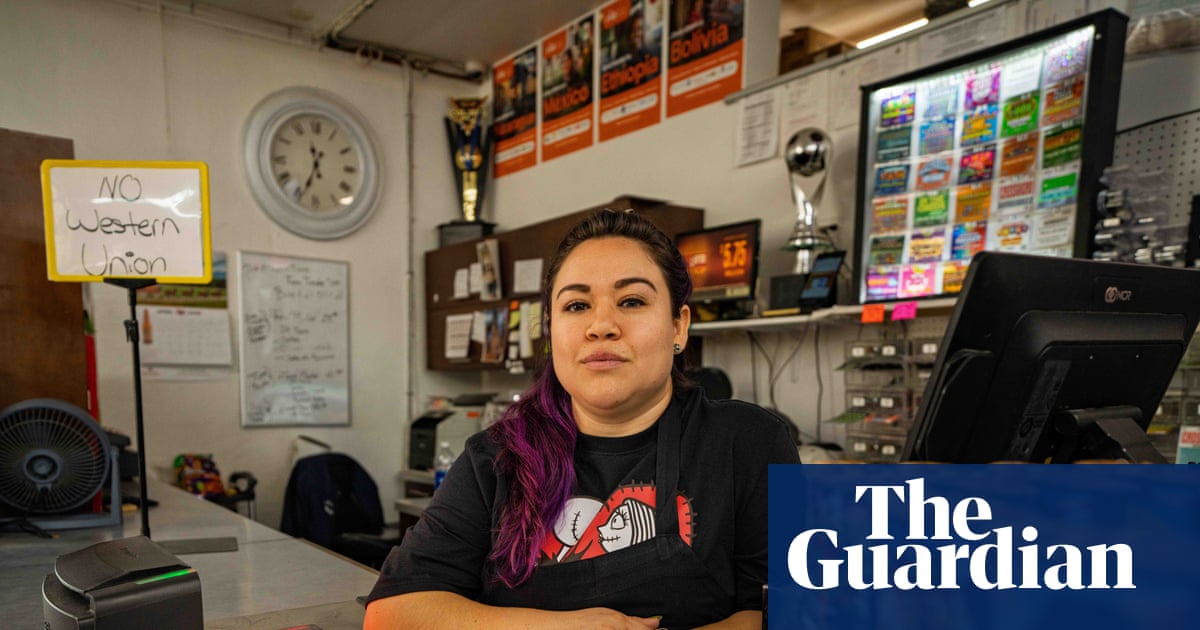
- Small businesses like Nachita's grocery in El Paso have seen dramatic revenue collapse as their immigrant customer base abandoned essential financial services.
- Legal experts have filed Fourth Amendment challenges to the rule, calling it arbitrary and overreaching, while critics argue it functions as a de facto targeting of Latino communities.
How it unfolded
-
A Reddit user directly addresses the claimed cartel justification, arguing the real reason immigrants avoid the services is fear of government targeting for deportation, not cartel concerns.
“I can think of one. Legal (or hell even "illegal") immigrants who don't want the government targetting them for deportation.”
TazBaz · r/news ↗ -
A Hacker News user argues that cartel involvement runs deep in Mexico's economy, suggesting that even legitimate remittances fund cartels indirectly, and frames the solution as either mass migration or stabilizing Mexico entirely.
“sending money to Grandma to pay for a car is funding the cartel who probably got paid to make the car available”
vorpalhex · Hacker News ↗ -
A Hacker News commenter notes the rule is also making it difficult for undocumented immigrants to obtain auto loans, destroying the used car market in Latino communities, and characterizes the move as using national security justifications to make it unlivable for some.
“They're banging the national security drum to make it unlivable here for some.”
burger_moon · Hacker News ↗ -
The Guardian article gains traction on Hacker News with 86 points and 157 comments, sparking debate about whether the policy actually targets cartels or constitutes surveillance overreach against vulnerable populations.
-
The Guardian reports that the FinCen policy has devastated small businesses across the border region and the immigrant communities who rely on them, featuring Nachita's grocery store in El Paso as a case study of how the rule has decimated customer foot traffic and revenue.
“I don't think it was to prevent money laundering. I was seeing a lot of people who were just not able to pay their bills or not able to send money to their families.”
Evangelina Ornelas · Hacker News ↗ - 71 weeks quiet
-
The administration rolls out an aggressive crackdown requiring any business providing financial services near the US-Mexico border to report cash transactions over $200, down from the previous $10,000 threshold, in an effort to stop money laundering and illicit activity.
What people are saying verbatim
“People would come in to do a money transfer, and while they were here they'd get a burrito or purchase grocery items.”
Evangelina Ornelas, Nachita's grocery store owner · The Guardian ↗
“I don't think it was to prevent money laundering. I was seeing a lot of people who were just not able to pay their bills or not able to send money to their families.”
Evangelina Ornelas, Nachita's grocery store owner · The Guardian ↗
“They're banging the national security drum to make it unlivable here for some.”
burger_moon, Hacker News commenter · Hacker News ↗
“sending money to Grandma to pay for a car is funding the cartel who probably got paid to make the car available”
vorpalhex, Hacker News commenter · Hacker News ↗
“I can think of one. Legal (or hell even "illegal") immigrants who don't want the government targetting them for deportation.”
TazBaz, Reddit commenter · r/worldnews ↗
“the new FinCen policy has faced criticism from legal and privacy experts, and has been met with legal challenges that call it arbitrary, unjustifiable and a violation of the fourth amendment”
The Guardian, News organization · The Guardian ↗
The conversation positions from the crowd, verbatim
The conversation focuses on whether the policy actually targets cartels or constitutes discriminatory surveillance and economic targeting of immigrant communities. Commenters are divided between those defending cartel-fighting justifications and those arguing the rule's real effect is deterring vulnerable populations from essential services.
The dispute Whether the policy is a deliberate targeting mechanism against immigrant communities or a legitimate (if poorly calibrated) anti-cartel tool with unintended harms.
The policy is intentional targeting of immigrant communities disguised as anti-cartel enforcement.
-
“They're banging the national security drum to make it unlivable here for some.”
burger_moon · Hacker News ↗ -
“I can think of one. Legal (or hell even "illegal") immigrants who don't want the government targetting them for deportation.”
TazBaz · r/worldnews ↗ -
“To Republicans cruelty is the point with everything they do, from voter to Congress.”
phoneguyfl · r/worldnews ↗
Cartel involvement in the Mexican economy is so pervasive that remittances inherently fund criminal activity, making some degree of financial restriction necessary.
-
“sending money to Grandma to pay for a car is funding the cartel who probably got paid to make the car available. Grandma may even pay small direct bribes to the cartel just to be able to live her life.”
vorpalhex · Hacker News ↗
The policy's stated cartel-fighting goal is reasonable but has been poorly implemented with excessive collateral damage to lawful activity.
-
“So there exist juridical interpretations that call monitoring low value money transfer «unreasonable searches and seizures»? This is immensely interesting.”
mdp2021 · Hacker News ↗ -
“We have similar problems in the UK. Lots of extra paperwork for small businesses and individuals, very little impact on big crime that was supposed to be the target.”
graemep · Hacker News ↗
The policy's impact is overstated; small businesses persist and continue making money despite the new rules.
-
“If this were true there wouldn't be any "mom-and-pop businesses" left. But they're still present and making money. So I call this "horse puckey"!”
giardini · Hacker News ↗
- Do Fourth Amendment protections against unreasonable searches extend to financial transaction monitoring below $200?
- What proportion of remittances actually fund cartel activity versus legitimate family survival needs?
- Are there effective alternatives to broad financial monitoring that could target cartel activity without deterring lawful immigrants from essential services?
Voices from the web unedited
-
Small businesses pay hidden toll after money-transfer rule change to curb illicit activities near the US-Mexico border
-
It surprises me how much Americans don't understand how deeply the cartel is in every transaction. Yes, sending money to Grandma to pay for a car is funding the cartel who probably got paid to make the car available. Grandma may even pay small direct bribes to the cartel just to be able to live her life.Either all of Mexico can move to the US…
-
The Trump administration said that, in an effort to stop money laundering and other illicit activity at the US- Mexico border, it would now require any business providing financial services in the region to report cash transactions over $200. Previously, the amount had been $10,000. But rather than dealing a crushing blow to the cartels, business…
-
Under the current regime, you can’t think of a single likely reason other than “cartels”? Really? I can think of one. Legal (or hell even “illegal”) immigrants who don’t want the government targetting them for deportation. And it’s extremely common that they’re sending back any extra money they can to their families back home- that’s most of the…
-
>He's also making it difficult/impossible for people without work visas to obtain auto loans [...]>They're banging the national security drum to make it unlivable here for some.But they're not supposed to be here in the first place? As for the people who are supposed to be here, but are collateral damage (ie. "which is destroying the used car…
-
I highly doubt destroying small business is an unintended consequence of the administration. To Republicans cruelty is the point with everything they do, from voter to Congress.
-
This article is repeating a transparently false framing as the truth. This wasn't a law about cartel money laundering, which doesn't happen near the border anyway. Money laundering at scale happens in the global market and always has.The clear purpose of the regulation was exactly the "side effect" detailed in the article: hurting immigrant…
-
If the money is not leaving the US, why does it have to be claimed? Do banks have to report deposits or money orders over $200?
-
Is it creating the manual of the dystopia planner to list the excuses for totalitarism? "National security", "Personal security", "The safety of your kids", "the children"...Or is it prodromic to a "stop talking to guts and let us put the factors in a computational framework, where all targets and constraints and consequences are laid out with…
-
One might as well say "the surgeon tried to cut out the cancer; took out some healthy tissue". Yeah, that's how it goes. The existence of side effects is not convincing as a reason not to do things. The objective is to get results while minimizing undesirable side effects, but the desirable amount of side effects is not zero.