DESI Legacy Surveys Release Biggest 2D Map of Universe
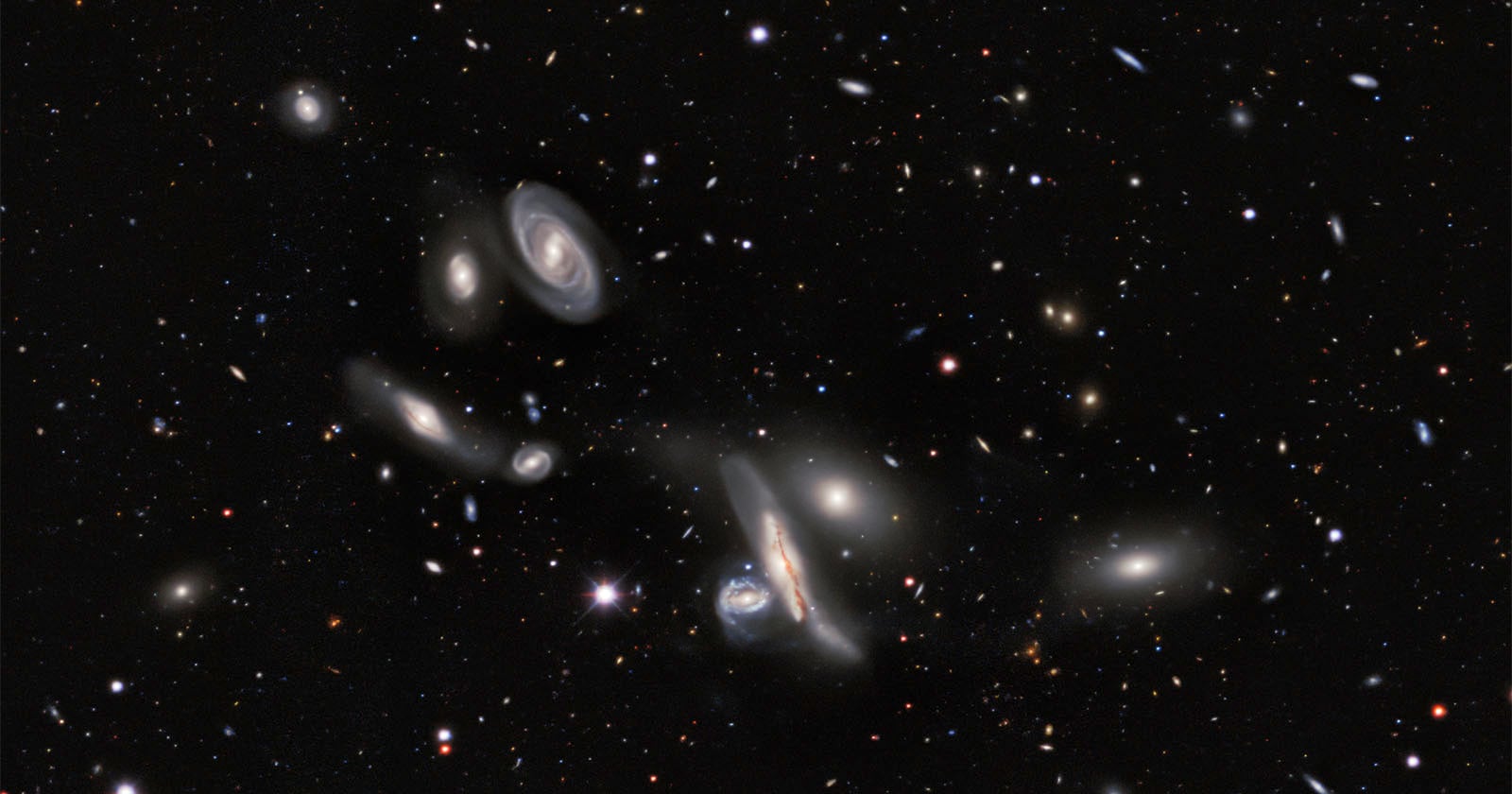
Scientists released a 5.6-trillion-pixel map of nearly 4 billion celestial objects, freely available to astronomers and citizen scientists worldwide.
Conversation activity · last 35 hours peak 9/30m
Summary, timeline and people extracted by Claude from 27 items across 5 sources · 6h ago. Quotes are verbatim.
The DESI Legacy Imaging Surveys team released the largest-ever 2D color map of the universe on August 10, 2026, containing 5.6 trillion pixels and nearly 4 billion celestial objects. Built from 263,407 telescope exposures across three ground-based surveys and supplemented by NASA satellite data, the map covers roughly 75% of the sky and is publicly available for research. The release follows April 2026 results from DESI that hinted dark energy's impact may be weakening over time, a potential paradigm shift in understanding the universe's fate.
- The largest-ever 2D map of the universe contains 5.6 trillion pixels and nearly 4 billion celestial objects, built from over 260,000 telescope exposures across multiple surveys.
- The publicly available map covers 75% of the sky and has already informed over 1,800 published science papers, establishing itself as foundational to modern astronomy research.
- Early results from the DESI survey hint that dark energy's impact may be weakening over time—a potential paradigm shift in understanding the universe's expansion and ultimate fate.
- The project represents 13 years of work by 160+ scientists and combines data from ground-based observatories and NASA satellites to enable research on dark matter, dark energy, and other cosmic phenomena.
How it unfolded
-
Reaction Story circulates on social platforms
The story gained traction on Hacker News and Reddit, with discussion of the map's 13-year creation timeline and its significance for astronomy research.
-
The DESI Legacy Imaging Surveys team released the largest-ever 2D color map of the universe, a 5.6-trillion-pixel map containing nearly 4 billion celestial objects. The data is publicly available through the Legacy Survey Sky Viewer.
“It's part of the fabric of astronomy research now. When you're working with astronomical objects today, you often start by pulling up the Legacy Imaging Viewer to see what you're looking at.”
David Schlegel · Google News ↗ -
The release was widely reported across scientific and technology news outlets, confirming the map's scale of 263,407 telescope exposures from three ground-based surveys plus NASA satellite data, covering 75% of the sky.
- 19 weeks quiet
-
The Dark Energy Spectroscopic Instrument completed its original five-year survey ahead of schedule and with vastly more objects than expected, yielding early results suggesting dark energy's impact may be weakening over time.
What people are saying verbatim
“It's part of the fabric of astronomy research now. When you're working with astronomical objects today, you often start by pulling up the Legacy Imaging Viewer to see what you're looking at.”
David Schlegel, Co-lead of Legacy Surveys, Berkeley Lab scientist · Lawrence Berkeley National Laboratory press release ↗ · Aug 9
“For our team, these data are fundamental to our investigation of the expansion history of the universe and the formation of our galaxy. But the skies belong to everyone, and this survey gives everyone the chance to explore the sky and marvel at its wonders.”
Arjun Dey, Co-lead of Legacy Surveys, NSF NOIRLab astronomer · Lawrence Berkeley National Laboratory press release ↗ · Aug 9
“The 5.6-trillion-pixel map contains nearly 4 billion celestial objects, primarily stars and galaxies.”
DESI Legacy Imaging Surveys team, Research team · Lawrence Berkeley National Laboratory press release ↗ · Aug 9
Voices from the web unedited
-
https://www. europesays.com/us/995017/ Scientists create largest 2D map of the universe with 5.6 trillion pixels and nearly 4 billion cosmic objects # Science # Space # UnitedStates # UnitedStates # US
-
You know those videos no one really understands that are calle "POV: When you yadda yadda"? Well, this "map" is POV: The universe from Earth.