Amazon expands robotic fleet to 1M+ units as warehouses blend human and machine labor
The e-commerce giant manufactures most robots in-house and plans new factories, even as researchers question whether automation truly eases worker burden.
What to know
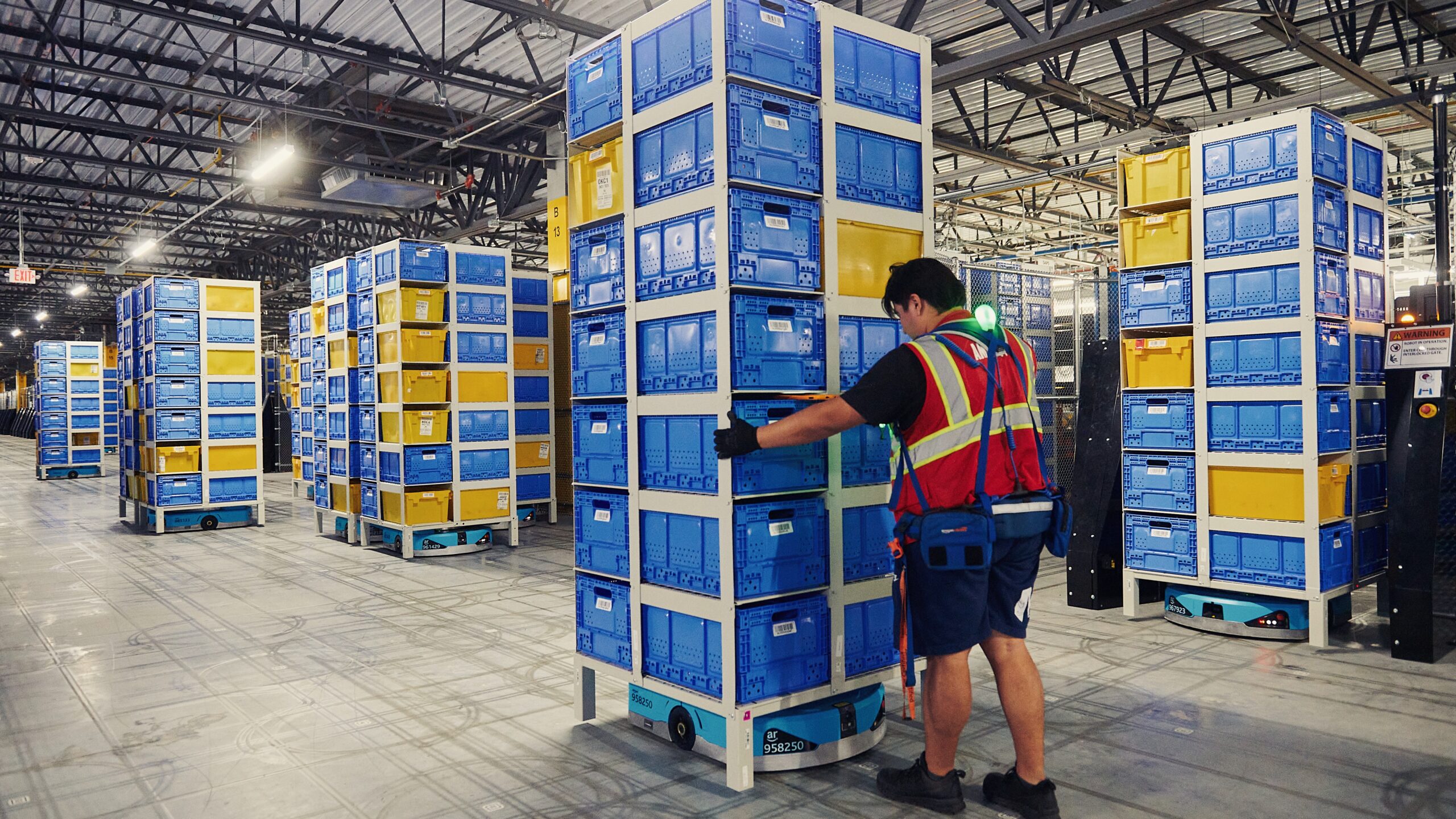
- Amazon operates over 1 million robots in warehouses alongside 1.5 million human workers and is building new factories to expand robot production in Austin and Indiana.
- Amazon claims robots reduce worker injury by handling high-risk tasks, but researchers find collaborative robots working in physical proximity to humans can instead dictate work pace and complicate traditional automation benefits.
- The warehouse sector has twice the injury rate of other industries and high turnover; robots remain incapable of all tasks humans perform, requiring ongoing close human-robot collaboration.
“For the last 100 years, most of the automation that we've seen usually happens away from workers—you're taking that high-risk task away from the worker, and you're doing so in a way that is not physically proximate. The rise of collaborative robots really changes that dynamic for two reasons: one is that it is physically proximate, and two, the robot has the ability to dictate the pace of work.”
Brian Greenwood, Business professor at George Mason University · Ars Technica ↗
Amazon E-commerce company operating robots and employing workersBrian Greenwood Business professor at George Mason UniversityLabor advocacy groups Worker advocates
How it unfolded 1 development · click the chart to see its coverage articlesposts
-
1
Ars Technica reports on tension between Amazon's automation promise and worker conditions
Ars Technica publishes investigation examining Amazon's robotic expansion, featuring expert analysis from George Mason University professor Brian Greenwood and evidence from labor advocacy groups suggesting warehouse automation driven by AI creates workplace complications despite company claims of easing worker burden.
“The rise of collaborative robots really changes that dynamic for two reasons: one is that it is physically proximate, and two, the robot has the ability to dictate the pace of work.”
— Brian Greenwood -
E
A million jobs lost Amazon has over 1 million robot workers. What’s next for human employees? On the scrap heap - no longer needed
-
-
background
Amazon announces new robot manufacturing factories in Austin and Indiana — Amazon announces plans to build additional production factories in Austin, Texas, and Greenwood, Indiana, to manufacture increasingly capable robots. The company primarily manufactures robots in-house at existing facilities in Massachusetts.
-
background
Amazon reports 1.5 million human workers alongside 1M+ robot workforce — Amazon's 2025 annual report confirms the company is the second-largest corporate employer with over 1.5 million full-time and part-time workers, while deploying more than 1 million robots operating around the clock in warehouses.
-
background
Amazon acquires Kiva Systems to pioneer mobile warehouse robots — Amazon acquires Kiva Systems, an early pioneer of wheeled mobile robots that bring racks of items to warehouse workers instead of requiring workers to walk around shelves. Kiva is subsequently renamed Amazon Robotics.
Also covered reported alongside — the timeline has no entry for these yet
-
first by Ars OpenForum, 21h ago · also Ars Technica
and 1 smaller piece